I have Instagram. Do I really need a website? (psychologist)
Instagram convinces people who already follow you; a website convinces people searching «psychologist + city» on Google. How both fit without duplicating effort.
An active Instagram does not cancel the need for a website. They are two tools for different moments in the decision.
Many psychologists invest time in the feed — posts on mental health, stories from the consulting room, short reels — and ask: «Why a website if I already have an audience?»
Short answer: Instagram speaks to people who already know you. The website speaks to people who do not know you yet but are looking for help now.
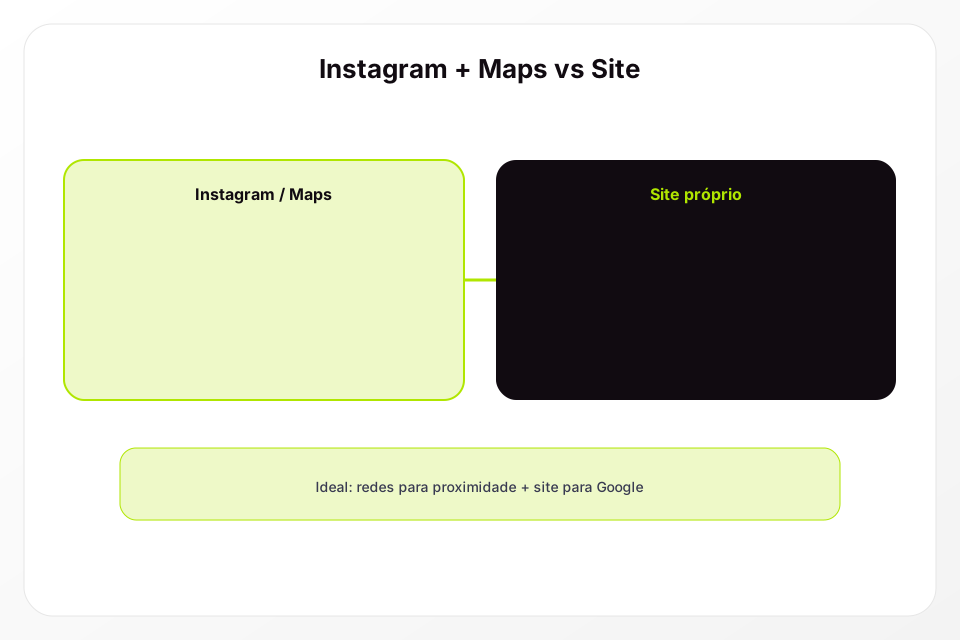
Overview — Instagram + website

How to read: feed = closeness; website = structure + trust + contact 24/7. The link in bio should lead to something more complete than a PDF or a loose form.
What Instagram does well
- Shows personality — tone matters in psychology.
- Keeps contact with colleagues and current patients (with ethical care).
- Works as a social business card when someone discovers you by referral.
Practical limitations:
- People who do not follow you do not see the content (algorithm).
- Searching «psychologist Cascais anxiety» on Google does not show your Instagram profile as a first credible option.
- GDPR, cookies and privacy policy are poorly resolved on a social profile.
- You only have one link in bio — you need to tell a complete story in that click.
What the website adds
| Situation | Instagram alone | With website |
|---|---|---|
| Friend referral | «I’ll check the profile» | Profile + site to confirm |
| Google search | May not appear at all | Indexed, structured page |
| «Do you work with teenagers?» | Scroll the feed | Clear Areas section |
| «How do I book?» | DM or generic link | Form or calendar |
| Sensitive data | Private message | Form + privacy |
«But I do not want to look commercial»
A psychologist website is not an online store. It is organised clinical information:
- who you are and who you work with;
- what the first session is like;
- where you practise;
- how to request contact.
That is not aggressive marketing — it is respect for the time of someone who is vulnerable and deciding whether to write to you.
The common mistake: only Instagram for years
It works while word of mouth and the feed reach people. It becomes fragile when:
- you want less dependence on platforms;
- you change city or open a new consulting room;
- colleagues with a website appear first on Google;
- you need to pass trust to companies (EAP, agreements).
Checklist — do I need a website beyond Instagram?
- Do I get enquiries from people who found me on Google?
- Does the link in bio clearly explain what I do in 10 seconds?
- Do I have fixed sections (areas, FAQ, contact) or only loose posts?
- Can I explain fees and modality (online/in-person) without a DM?
- Do I have a privacy policy linked to forms?
If you ticked 2 or fewer, a well-made minimal website probably pays for itself in time saved and better-qualified enquiries.
How this fits with what I already wrote
In website vs Instagram vs landing page I cover the format. Here the focus is psychologists who already have an active feed.
Want to see the full structure?
In the guide for psychologists I explain each section of the demo (Inês Carvalho), why it exists, and how much it costs — fixed base + extras. You can open the interactive example and compare with what you have today in your Instagram bio.
Ready to take the next step?
Pick a plan, browse models for your industry, and request a proposal — reply within 24 hours.